Northwest Database Society (NWDS) Annual Meeting 2026
Where:
Bill & Melinda Gates Center For Computer Science & Engineering
Zillow Commons (4th floor)
University of Washington
3800 E Stevens Way NE
Seattle, WA 98195-2355
Parking information: (we recommend using the self parking option on Padelford - N20 and N21). Please plan 20 min to park and walk to the Gates Center.
Wifi will be available to participants.
When:
Friday, March 13th, 9:00am - 4:30pm.
Description:
The Northwest Database Society Annual Meeting brings together researchers and practitioners from the greater Pacific Northwest for a day of technical talks and networking on the broad topic of data management systems.
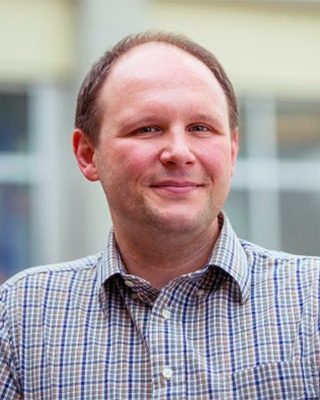
Keynote: “Relational Equality Saturation: E-graphs Meet Query Engines,” Zachary Tatlock (UW Allen School)
Equality saturation (EqSat) has emerged as a practical way to do rule-based optimization and reasoning in compilers, theorem provers, and even query optimizers. Instead of relying on delicate rewrite scheduling heuristics, EqSat approximates applying “all rewrites in every order” by using e-graphs to represent a large equivalence class of expressions compactly, then performs cost-based extraction to pick the best version.
This talk will explore how treating EqSat as a data management problem has made this technique a hot topic in the PL world and beyond. A central bottleneck in EqSat is “e-matching”: finding all substitutions that make a rewrite pattern match some term in the current e-graph. We show that e-matching is naturally equivalent to evaluating conjunctive queries over a relational encoding of the e-graph. This perspective enables (i) asymptotically better matching via database join algorithms (including worst-case–optimal joins), (ii) principled data-complexity guarantees, and (iii) new “multi-pattern” and merge-only rule forms that are awkward in traditional e-graph engines.
Building on this connection, we developed egglog, which treats EqSat as “Datalog + congruence.” Congruence becomes a functional-dependency invariant; saturation becomes fixpoint evaluation; and analyses/guards become functions with user-defined merges. This unifies rewriting, analysis, and incremental maintenance under one rule engine, while leveraging classic Datalog ideas such as semi-naive evaluation.
We will survey some of the many projects using EqSat to achieve state-of-the-art results in compilers, hardware design, computation fabrication, and more. Finally we’ll close with some current challenges and next steps for DB-inspired EqSat engines going forward.
Agenda:
8:30 am Coffee/tea
9:00 am Welcome (Magda Balazinska)
9:05 am Keynote: “Relational Equality Saturation: E-graphs Meet Query Engines,” Zachary Tatlock (UW Allen School) (slides) (Session chair: Dan Suciu)
10:00 am BREAK
10:30 am Session 1 (Session chair: Leilani Battle)
- “Avoiding Thread Stalls and Switches in Key-Value Stores: New Latch-Free Techniques and More,” David Lomet (slides)
- “I Can’t Believe It’s Not Yannakakis: Pragmatic Bitmap Filters in Microsoft SQL Server,” Hangdong Zhao (Microsoft) (slides)
- “Scaling Datalog on GPU,” Yihao Sun (Syracuse University) (slides)
- “KalDB: A Polystore for Search and Analytics Workloads,” Suman Karumuri (KalDB)
- “Querying with Conflict of Interest,” Arash Termehchy (Oregon State University)
- “Progress Indication for Deep Learning Model Training,” Gang Luo (School of Medicine, UW) (slides)
12:00 pm Lunch with posters
1:30 pm Session 2 (Session chair: Dan Suciu)
- “From Sight to Insight: Visual Memory for Smarter Assistants,” Luna Dong (Meta)
- “What’s New in BigQuery AI/ML,” Xi Cheng (Google) (slides)
- “Snowflake Semantic View: Unlocking Efficient and Trusted AI-powered BI,” Evelyn Li and Tian Gao (Snowflake) (slides)
- “What Does Responsible AI Mean? A Cross-Area Perspective,” Leilani Battle (Allen School, UW)
- “TraversRL: Reinforcement Learning for Urban Data Repair,” Bill Howe (Information School, UW)
3:00 pm BREAK
3:30 pm Panel: “Agentic AI And Data Management” (Session chair: Magda Balazinska)
- Hossein Ahmadi (Snowflake)
- Sudipto Das (Databricks)
- Jenny Ortiz (Google)
- Vidya Setlur (Tableau Research)
- Markus Weimer (Microsoft)
4:30 pm EVENT ENDS
Accommodations:
The following are suggested hotels near the University of Washington. Please contact them for further information.
Graduate Seattle (formerly the Hotel Deca)
Contact Information:
Sponsors:
We thank the UWDB industry affiliate partners for supporting this event.
- Amazon
- Microsoft
- MotherDuck
- Numbers Station
- Snowflake
- Teradata
- Western Digital
Previous Meetings:
This is the ninth meeting of the series. Previous meetings were held at: